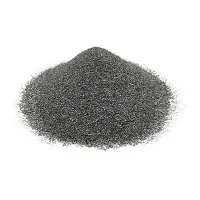
In the world of modern industrial friction-from automotive brakes to heavy machinery-graphite, with its unique self-lubrication and high-temperature stability, has become an indispensable friction material. However, the different degrees of graphitization between the two materials play distinct roles in the friction arena.
Full-graphite exhibits superior lubrication properties due to its complete layered structure. Experimental data shows that the dynamic friction coefficient of full-graphite is stable within the range of 0.1-0.15, while the friction coefficient of semi-graphite fluctuates more widely (0.15-0.25) due to its high number of lattice defects. In automotive brake pad applications, full-graphite materials can reduce the tail lift of the braking torque curve by 40%, reducing braking noise and vibration. This difference stems from the continuous lubricating film formed by full-graphite on the friction surface, resulting in a wear rate 30%-50% lower than that of semi-graphite.
Full-graphite has a fixed carbon content of >=98.5% and a sulfur content of <=0.05%, while semi-graphite has a sulfur content of up to 0.3%. Its high purity ensures that full graphite remains chemically stable even in temperatures exceeding 300℃, making it suitable for extreme conditions such as racing cars and heavy machinery. Semi-graphite, however, due to its high sulfur content, tends to generate sulfide gas at high temperatures, resulting in a sharp drop in friction coefficient, limiting its application in high-temperature braking applications. However, semi-graphite is only 80% the price of full graphite, making it more cost-effective in applications where performance requirements are less stringent, such as brake pads for economy passenger cars.
Semi-graphite has become a mainstay in mainstream automotive brake pads and industrial clutch friction linings due to its excellent friction stability, good wear control, and cost-effectiveness. Its balanced performance meets the core requirements of reliable braking and durability in everyday driving and common industrial equipment. Full graphite, with its exceptional lubricity, excellent thermal conductivity, and high-temperature stability, excels in extreme operating conditions. In high-speed train brake discs, high-performance racing car brake systems, and certain demanding sealing ring applications, full graphite is a key component in meeting the challenges of high temperatures, high speeds, and heavy loads. Its cost is generally higher than that of semi-graphite.
Future development will show a polarized trend: full graphite will further improve its wear resistance through nano-coating technology, while semi-graphite will develop towards a functional composite. This technological differentiation not only meets the performance requirements of different fields but also promotes the sustainable development of the friction material industry.